Comics

Poptropica Fan Comic: The Bucky Stops Here ๐Ÿš๐Ÿบ๐Ÿ’ฅ

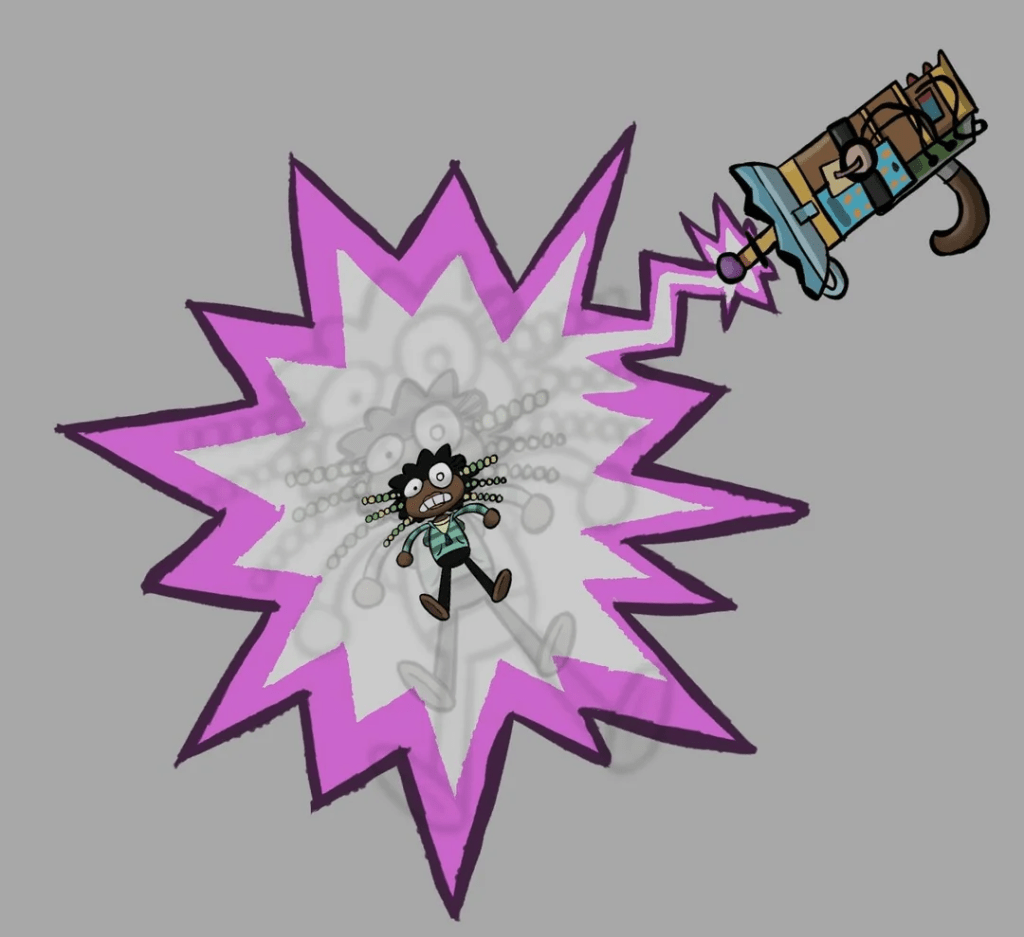
Hey Poptropicans! Remember Bucky Lucas, the washed-up contest winner on Reality TV Island? Poptropica fan artist Cherry (cacaocheri) recently made a comic imagining his life after coming home from losing the game show, and with their blessing, we’d love to share it with you!

(Content warning: Contains references to alcohol.) Enjoy the comic below:


Aww, you’ll be okay, Bucky! ๐Ÿฅน Speaking of comics, we’re pleased to announce that we’ve updated our Poptropica comic strip collection with better quality visuals, courtesy of HPuterpop. Enjoy all the adventures with Oliver and Jorge from our Comics page! ๐Ÿ’ฅ

~๐Ÿ 

Uncategorized, Web Development

Blimp Journey: Passing the baton for a Poptropica-inspired game ๐Ÿ‘จ๐Ÿพโ€๐Ÿ’ป๐Ÿซ†

Hey Poptropicans! Several months ago, an aspiring game developer began working on a Poptropica-inspired game that came to be known as Blimp Journey. Though progress was promising, sadly the project has since been halted. Now you’re invited to continue this work!

Allen Dawodu, also known as Looks to the Moon or mysystemlagz on Discord, along with a small team, has so far released a tutorial and two simple islands which can still be played on BlimpJourney.com for now. Check out screenshots below from the adventure Scorched Complex, which includes Poptropica-like elements such as point-and-click movement, collecting items, and puzzles:

The tutorial, as well as another quest called Dragon’s Claw Volcano, are accessible by going to the map via the hamburger menu in the corner. The latter features more colored artwork and puzzles:

Credit also goes to era for story development, Antonio Raymond for music, Snoopypilots for artwork, and the (now gone) Blimp Journey Discord community for playtesting and offering feedback.

Though Allen has stopped working on Blimp Journey due to limited time and resources, he’s inviting anyone with game development skills and passion to continue his work (built with the Godot engine) using the source code and assets for the project, now publicly available on GitHub. This repository, he says, has everything you’ll need to create character designs and islands relatively quickly. And if you do end up creating something with it, we at the PHB would love to hear about it!


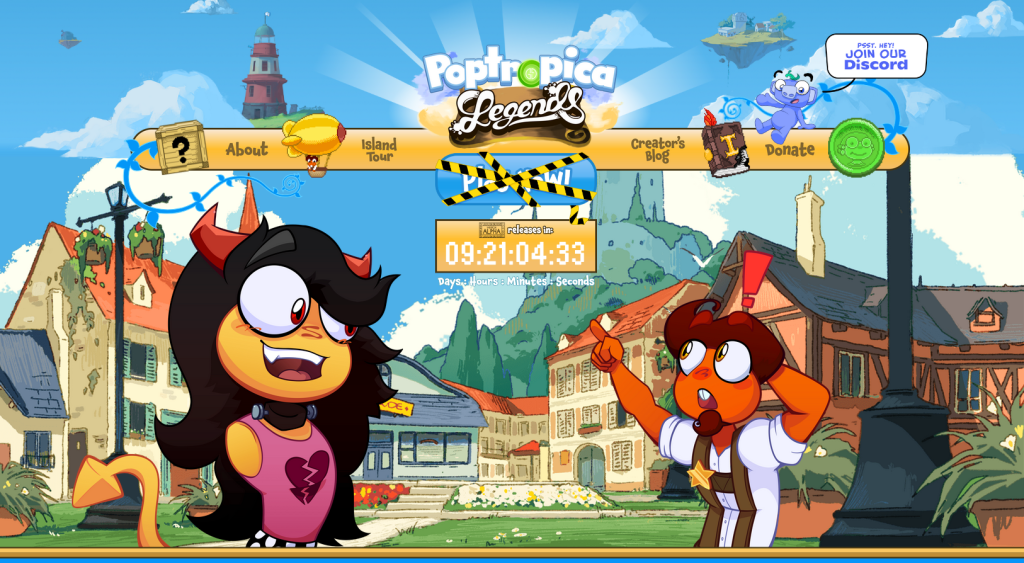
While we’re sad to see the end of Blimp Journey, it’s definitely left an impact for Poptropica fan game development, as there are currently a couple other games in the works that have been encouraged by this project. ๐Ÿ’ฅ Poptropica Legends, led by HPuterpop, is aiming for a demo release in June, while NewTropica, led by FoundOasis, aims to recreate a Poptropica launcher like Flashpoint. We’re keeping our eyes peeled for updates, so stay tuned with us! ๐Ÿ‘€

~๐Ÿ 

Poptropica: Legends

How to Draw a Poptropican: A Deep Dive โœ๏ธ๐Ÿ˜ณ

Hey Poptropicans, this is aย guest postย by HPuterpop/Andrew Wiles. Enjoy!

From the moment of Poptropicaโ€™s inception, there has been constant evolution taking place in the minds of both the developers and fans of the game. โ€œPoptropicansโ€ as they appear in the original game are barely humanoid creatures, with bodies consisting of simple shapes and lines, the distinct lack of a nose, and large circular eyes that pop out of the top of their heads.

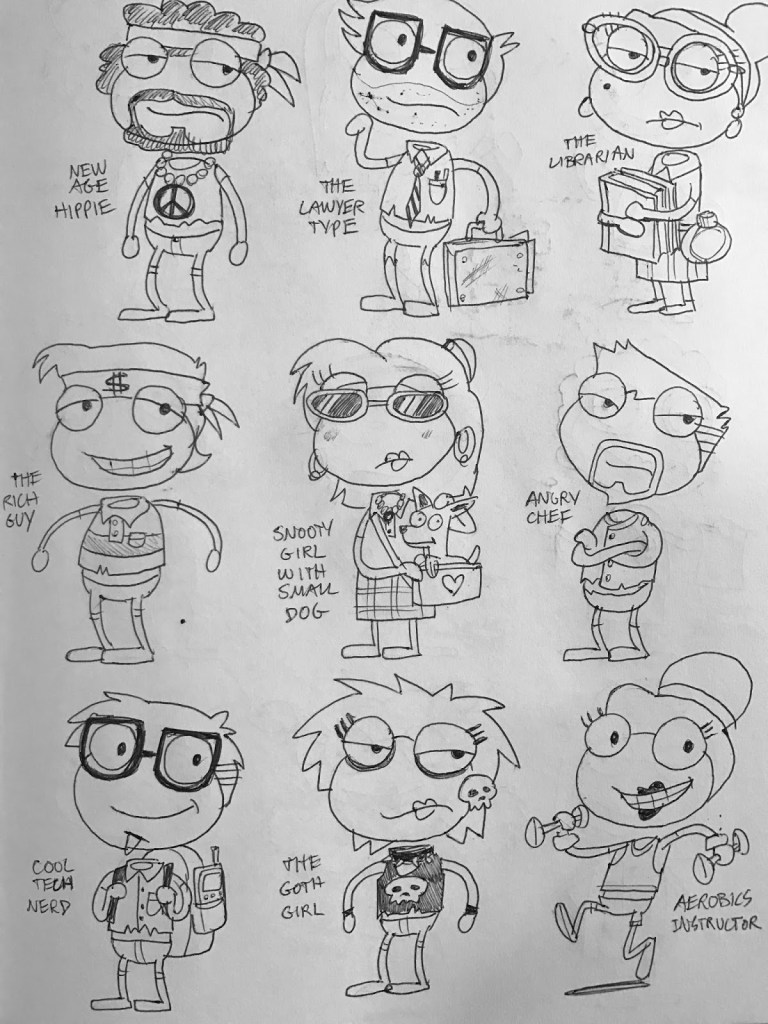
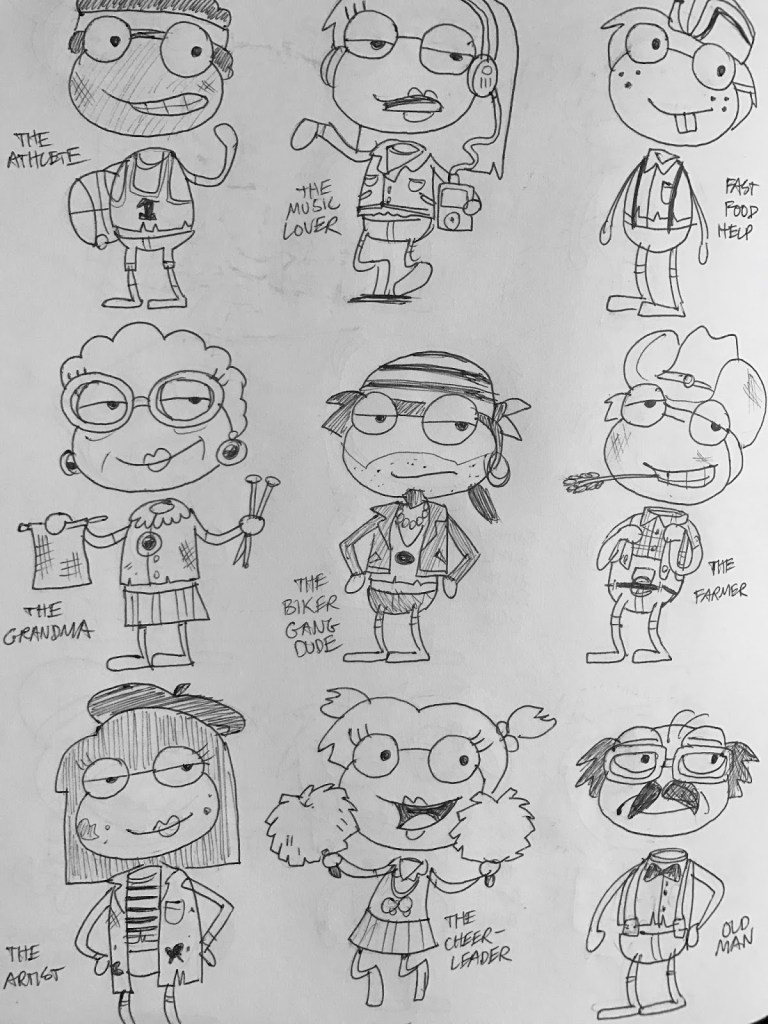
While this seems like a simple description at first, when you begin to look closer at official renderings of these creatures โ€” from in-game to promotional art to the graphic novels โ€” you begin to notice that there are in fact a near infinitude of choices that demand decision when drawing them. This complexity is further illuminated when looking at art made by fans of the game. There is a spectrum from the simple in-game avatars to fully realized, fleshy organisms that are in constant tension โ€” an inevitable byproduct of the very concept of these characters.

Official Designs

Focusing on official interpretations, there was a fairly linear morphological evolution of Poptropicans over its lifespan. In the early years, Poptropicans were rarely if ever depicted as any more complex than the in-game avatars.

The most nonconforming example from this time period would be the Ned Noodlehead comic strip, where Poptropicans had slightly thicker limbs and nebulous hand-like appendages. A โ€œpolishedโ€ version of avatars would also appear in promotional material and daily quiz entries. Poptropicans didnโ€™t have necks, fingers/toes, or realistically sized limbs, instead opting for floating heads, noodle limbs, simple spheres for hands, and oblong ovals for feet.

2011 shook everything up for the Poptropica style. The action figure line featured actual hands and thicker limbs, the former so that the toys could hold their accessories, the latter more than likely because of the physicality of the toys themselves. While they didnโ€™t have necks, they didnโ€™t not have necksโ€ฆ

Finally, the one other major jump these toy models made โ€” they were three dimensional! At long last, we now had the official answer as to how Poptropican faces (and bodies) looked from the side! The original 2D in-game model was designed to suggest depth by having one eye smaller than the other, but the toys confirmed it: Poptropicans have symmetrical eyes. These toys also introduced the concept of the โ€œridgeโ€ as Iโ€™ll call it โ€” the space at the bottom of the eyes where they sit, creating a small indent and hump (where a nose would be on a human).

These design choices stuck, and were further evolved when the Poptropica comic strip illustrated by Kory Merritt made its debut. Koryโ€™s impact on the way Poptropicans were depicted moving forward canโ€™t be understated: his Poptropicans boasted necks, fingers, and more realistic humanoid morphology. Koryโ€™s depictions served as a catalyst that shifted the brand away from the simplistic avatars in promotional material, as well as an eventual attempt at in-game implementation with Poptropica Worlds avatars. (Funny enough, Kory actually wasnโ€™t very keen on including the ridge on his Poptropicans.)

The in-game implementation of Koryโ€™s design was, at least in my opinion, disastrous. Poptropica Worlds’ avatars are not very nice to look at, the fluid hand-drawn form clashing with the rigid vector-based shapes and lines.

Koryโ€™s version was the last major evolution of note, at least that Iโ€™m aware of. We could talk about the 3D Roblox models, but to be honest I donโ€™t think itโ€™s really worth spending more time than this sentence on. However, there is one other prominent Poptropica artist who I would argue pushed the Poptropica style forward: Jon Pitcher. While not part of the official game, his Popstorm! series of sketches showed us a new, dynamic way to draw Poptropicans, especially when it came to head and body variation. This is where things were just getting good! Too bad Poptropica never became a household name like Jess M. Brailler dreamed.

Male/Female Dimorphism

A feature notably absent from virtually all official Poptropican representations (besides some very rare instances from Koryโ€™s work) is male/female dimorphism, which is a distinct difference in size or appearance between the sexes of an animal. This is a pattern that most species on Earth follow โ€” one sex is distinctly physically different in appearance to the other. Take peacocks, where the male has a beautiful saturated feather pattern, while the female is rather unsaturated and less ornate in comparison.

And this also applies to humans, where everything from our skeletal anatomy to where we grow hair is often a result of the difference of our biological sex (of course, gender is a different discussion). Poptropicans have NEVER been represented as dimorphic (besides those rare exceptions from Kory) โ€” check out these identical boy/girl versions of the โ€œAnatomy of a Poptropicanโ€ wallpapers.

It is true that the ONLY consistently dimorphic feature in the original game was the inclusion of eyelashes on the female models โ€” a trope dating back the 1920s, when characters like Minnie Mouse and Daisy Duck were essentially just clones of their male counterparts with minimally โ€œfeminineโ€ features being added like eyelashes. In Poptropicaโ€™s case, this seems like an intentional choice to be as kid-friendly as possible, steering away from any reference to sexuality.

Community Designs

On the community side of things, experimentation has always been the name of the game. Fan artists give their Poptropicans unique eye shapes, floating eyebrows, stick limbs/human limbs/no limbs at all โ€” and often give their characters more realistic body shapes instead of the classic oval (usually implementing male/female dimorphism). Fan artists have been pushing the boundaries of the Poptropican form from the very beginning, testing out thousands of different unique design elements. Each fan artist brings their distinct visual style to Poptropicans, resulting in near-infinite variation.

There is one particular recurring design element that Iโ€™d like to identify here: the flat eye design. Some fan artists draw whichever eye is furthest from the focal point of the drawing in such a way that it appears less like a spherical shape and more like a flat disc. This creates a unique effect, evoking the way a moreโ€ฆ terrestrial eye might look from the side โ€” and itโ€™s definitely a popular idea within the community.

All of these stylistic choices beg the question: what makes a Poptropican a Poptropican? Which elements are essential, and which can be removed/altered while still being recognizable?

Essential Features

Well, a few things are definitely essential. I think the most important element that makes a Poptropican a Poptropican is the absence of a nose above all else. As soon as you add a nose (ignoring a few canon characters who like making things difficult), youโ€™re no longer in Poptropicaโ€™s orbit โ€” at least stylistically.

The โ€œfrogโ€ eyes are another non-negotiable – the way they โ€˜popโ€™ out from the top of the charactersโ€™ heads is iconic (they neednโ€™t even be spherical, they just gotta pop!).

I would argue that the last essential feature would be a large head to body ratio โ€” Poptropicans tend to boast some pretty massive domes relative to their real-life counterparts.

Besides these three features, the level of humanoid morphology that an artist decides to use is probably optional. This is not to say that artists who draw Poptropican characters without those features are somehow invalid in doing so – only that their characters may not always read as Poptropicans visually.

Poptropica: Legends

These considerations and nuances have been brought to my attention as Iโ€™ve been working to establish the optimal style to represent Poptropicans in Poptropica: Legends. Poptropicans in Legends have historically been some of the most humanoid interpretations to date, in large part due to the level of maturity I want to bring to the Poptropica universe.

However, itโ€™s hard to ignore the value of the wonderfully nostalgic simplified forms of those good old in-game avatars. Because of this, Legends will feature two different versions of Poptropicans โ€” one for overworld avatars, and one for dialogue/cutscenes. The dialogue/cutscene version can be thought of as the โ€œtrueโ€ depiction of the character, while the overworld avatar is a simplified, abstract form (though there are clear through-lines between the two).

I like to think of the Legends style as if Poptropicans were designed by Walt Disney โ€” and Iโ€™m naming it Whimsical Style. Itโ€™s clear that there is a delicate balance when it comes to depicting Poptropicans in-game, as we can see how that might be poorly executed with Poptropica Worlds. Because of this, overworld Legends characters (weโ€™ll call this Overworld Whimsical Style) are close but not too similar to their more fleshed-out depictions (weโ€™ll call this Detailed Whimsical Style).

With both of these styles, there will be a large variety of different head shapes, eye shapes, and body shapes, unlike OG Poptropicaโ€™s single standard. These variations have been inspired both by community artwork and by what might serve the story better โ€” Poptropicans canโ€™t all be the same height, right?ย 

This project has been evolving ever since it first was conceived back in 2016. Our latest significant shift in vision is having both a Story Mode following the adventures of Meridian and company, and a Free Play Mode which will allow you to create your own avatar and explore Poptropica like the original game. This is a big change from previous concepts, and I hope youโ€™re as excited for it as I am.

Poptropica: Legends has recently ramped up production, and weโ€™re heading towards a demo release in late May/early June! Get ready to experience this next chapter in Poptropica history โ€” made by fans, for fans. ๐Ÿ˜€

Thanks for reading this rather long-winded essay. I hope you enjoyed, and maybe you can employ some of the techniques outlined here in your next Poptropica art piece. Just donโ€™t forget the ridge!

Thatโ€™s all for now,


Hope you enjoyed thisย guest postย by HPuterpop/Andrew Wiles. If you did, you might also enjoyย reading more about the development of Poptropica Legends, or the PHB’s own (simpler!) How to Draw a Poptropican Guide.

The Poptropica Help Blog welcomes interesting Poptropica insights from anyone in the Poptropica community with thoughts to share. Interested in writing for the PHB? Weโ€™d love to hear from you!
Merchandise, Pop Fan Artist Spotlights

Pop Fan Artist Spotlight: DizzyLeopardShop merch ๐ŸŒŸ

Hey Poptropicans! Welcome to another installment of Pop Fan Artist Spotlights. This feature is extra special because it’s not just art, but art you can buy and hold in your hands… it’s the first and currently only Poptropica fan-made merch store on the market! โœจ

Alex/Kaitlyn from DizzyLeopardShop runs a very special online store (available on their website, Etsy, and TikTok) which offers colorful knickknacks like pins and keychains inspired by various franchises. Check out their super cool “Popflopita” goodies!

A few of us from the PHC have bought some of their stuff in the past few months and can attest to their quality and charm! HPuterpop snagged their Popflopita map shaker keychain (now out of stock), while Gentle Dolphin and I got the little Shark Boy pin, plus I added on the Mythology Island stickers as well. Very cute!

Over on their website, Dizzy Leopard drops some lore about their store, including, as you may have guessed, the Poptropica origin of their name. As for the shop, it began in the quarantine summer of 2020 and aims to bring joy through cute and nostalgic items. โ™ก Have a browse!

Q&A with Dizzy Leopard

We reached out to Dizzy to hear more about their experiences with Poptropica and their shop. Hereโ€™s what they shared!

What are your favorite Poptropica memories?

My favorite Poptropica memory is sitting in my mom’s office while she was away working and I would be on her computer playing Poptropica. She would come in after I was playing for maybe 20 minutes and yell at me saying, โ€œDizzy, I know you’re playing that darn game again! The sale system only glitches like this when Adobe Flash is running.โ€ I would frantically deny this while trying to save any game progress before closing the window of evidence.

What are the highlights & challenges of running a small business?

The highlights are being able to make art every day and then see the positive impact it can have on so many people. The hardest part is probably constantly questioning yourself and feeling like you need to be doing something new and different to be better. It is challenging for sure, but you can also never improve if you don’t take that little voice to heart every once in a while.


By the way, if you have a Poptropica item you’ve been dreaming of, you can even send in requests for a chance to get them made! ๐Ÿ™Œ

Besides DizzyLeopardShop, you can also get Poptropica merch through official channels such as Pop’s Zazzle shop. Check out our Poptropica Merchandise Guide for more deets about what’s out there! ๐Ÿคฉ

Keep on poppin’ on!

~๐Ÿ 

Blast from the Past, YouTubers

The Rise and Fall of Poptropica: A Video Essay by Dream Jelly ๐ŸŽฅ๐Ÿชผ

Hey Poptropicans! This game has been such a cultural cornerstone for many Gen Z kids growing upโ€”it’s definitely worth a closer look.

Mid-twenties YouTuber Dream Jelly, known for her video essays on childhood nostalgia from the 2000sโ€“2010s, recently shared a deep dive into “The Rise and Fall of Poptropica” that has already gained 80K+ views within a week of posting. Check it out:

From the single island of Early Poptropica the game began with in 2007, to the massive growth it’s experienced through expansions with creative sponsored ads, monetization models like memberships, and the now-defunct Poptropica Worlds, Dream Jelly takes us on a journey through Pop’s history, intermingled with her thoughtful commentary.

Some interesting highlights she shares about Poptropica’s rise in the late 2000sโ€“early 2010s are the quirky videos kids shared for fun on YouTube before influencer culture took over, and the uniqueness of Poptropica’s storytelling in a sea of sandbox-style kids’ virtual worlds.

Look Out Below: Wait for the drop…

As for its fall, Dream Jelly questions whether all the game’s side features like store items, merch, mobile apps, and even Realms, was worth the vibe shift from its simpler times, recalling founder Jeff Kinney’s original vision of focusing on the player as the main character.

Poptropica fell further, she observes, as the game continued on in directions no one asked for, from branding-confused Roblox games to the Steam release without the oldest islands.

The overall critique boils down to prioritizing revenue over players. Would listening to players have made Poptropica live forever…? Probably not, but I still believe that a little additional integrity when it came to monetization and transparency when it came to keeping fans in the loop towards the end would have gone a long way for its image.

Still, Dream Jelly wraps up on this positive note:

Poptropica had a great run overall… I think that in the time that it had, Poptropica did tell original stories with humor, creativity, and a clearly passionate team, giving millions of players an experience that they’ll look back on fondly, no matter how it ended.

Thanks for the retrospective analysis, Dream Jelly! For another take on Poptropica’s history, check out this video essay by Lulaloopsey. And for more Pop memories, check out our Poptropica Yearbook! ๐Ÿ’™

Keep on poppinโ€™ on,

~๐Ÿ